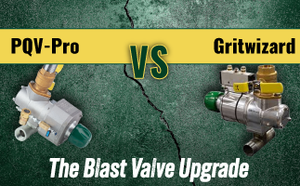


Learn how the PQV-Pro Pneumatic Abrasive Metering Valve works, what it is used for, compatible abrasives, key benefits, specifications, and how to choose the right configuration.
By on Jul 28th 2026
Consistent abrasive flow is one of the biggest factors in blasting performance. Too much abrasive can waste media, reduce visibility, increase cleanup, and create unnecessary wear. Too little abrasive can slow production and make it harder to achieve the desired surface profile.
The PQV-Pro Pneumatic Abrasive Metering Valve is built to give blast operators more control over abrasive flow while reducing common maintenance concerns found in traditional abrasive metering valves. It is a normally closed, pneumatically operated valve designed for pressure blast systems that require fast response, repeatable adjustment, and reliable shutoff.
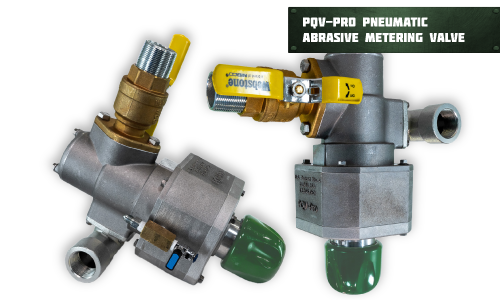
What Is the PQV-Pro Pneumatic Abrasive Metering Valve?
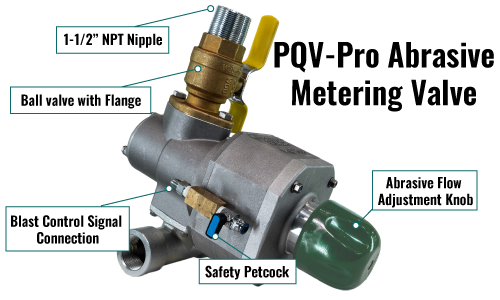
The PQV-Pro is an abrasive metering valve used on blast pots to control how much abrasive enters the air stream. It connects below the blast pot and meters abrasive into the blast hose and pusher line.
Unlike diaphragm-style valves, the PQV-Pro uses a piston-actuated design. This removes moving diaphragms from the metering function, reducing one common wear point. Clemco also designed the valve with a single signal air line, which simplifies setup compared to systems that require additional solenoid control.
For operators, the goal is straightforward: more consistent abrasive flow, faster response at the control handle, easier service, and less downtime.
How the PQV-Pro Works
The PQV-Pro is normally closed. When the blast machine is idle and the control handle is released, air-assisted spring pressure keeps the valve closed and stops abrasive flow.
When the operator presses the control handle, control air opens the valve to the preset metering position. The amount of abrasive flow is controlled by the metering knob. When the operator releases the control handle, control pressure vents and spring pressure closes the valve again.
This design helps support cleaner starts and stops. It also gives operators a repeatable setting, which is useful when they need a consistent blast pattern or surface finish.
Key Benefits of the PQV-Pro
The PQV-Pro is designed for blast operations where control, uptime, and serviceability matter.
Key benefits include:
- Precise abrasive metering: Helps operators fine-tune media flow for the job.
- Normally closed operation: Stops abrasive flow when the control handle is released.
- Piston-actuated design: Removes moving diaphragms from the valve design.
- Single signal line: Simplifies pneumatic setup.
- Serviceability on the pot: The valve is designed for quicker servicing without unnecessary teardown.
- Optional metering under pressure: An optional kit allows adjustment while blasting.
- Reduced maintenance complexity: Fewer common wear items can help reduce service interruptions.
Clemco reports that the PQV-Pro was tested for 300+ hours before first service in a pressure-hold application using 25 and 80-grit hardened steel media. The TDS also notes 10% higher media flow than competitive valves under the stated test conditions.
Compatible Abrasives
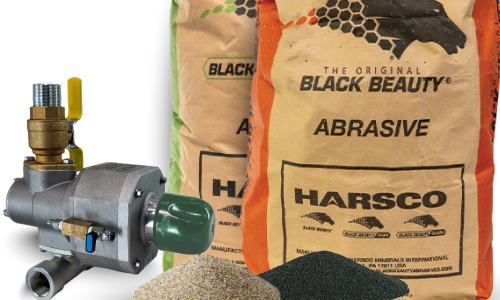
The PQV-Pro is designed for most common blasting abrasives ranging from 16 mesh to 220 mesh. Compatible abrasive types include:
- Slags
- Crushed glass
- Glass bead
- Steel shot
- Steel grit
- Aluminum oxide
- Silicon carbide
- Garnet
- Plastic media
- Agricultural media
Lightweight abrasives, such as plastic and agricultural media, generally require a blast machine with a 60-degree conical bottom for consistent media flow.
Sand should not be used for abrasive blasting because of the respiratory hazards associated with crystalline silica. Operators should always use abrasives manufactured specifically for blasting and review the abrasive SDS before use.
Pressure and Operating Specifications
The PQV-Pro requires 80 psi to fully open and has a maximum working pressure of 175 psi. It is available with 1.25-inch and 1.50-inch outlet configurations.
Available configurations include:
- 32390: 1.50-inch outlet pipe with flanged ball valve
- 32120: 1.25-inch outlet pipe with flanged ball valve
- 32389: 1.25-inch outlet pipe without flanged ball valve
Each configuration is listed at 21 pounds. The versions with flanged ball valves are 14 inches high, 7.5 inches wide, and 15 inches deep. The 1.25-inch version without the flanged ball valve is 10 inches high, 7.5 inches wide, and 15 inches deep.
For the current product listing and available configurations, view the PQV-Pro Metering Valve Assembly.
How to Adjust Abrasive Flow
Abrasive flow depends on the abrasive type, mesh size, nozzle size, blasting pressure, and job requirements. The general goal is to use as little abrasive as possible while maintaining the desired cleaning rate.
The PQV-Pro is closed when the metering knob is turned fully clockwise. Turning the knob counterclockwise increases abrasive flow. Turning it clockwise reduces abrasive flow.
A practical starting point is two turns open from fully closed. From there, operators can increase flow in small 1/4-turn increments and allow 10 to 15 seconds for the abrasive flow to stabilize before adjusting again.
Maintenance and Service Considerations
The PQV-Pro is designed to be easier to service than older valve styles. The product bulletin notes that the actuator can be replaced on the pot in under 10 minutes. The TDS also describes a 15-minute actuation assembly swap.
The manual identifies service parts including the plunger, seat, gasket, actuator O-ring, metering knob assembly, outlet pipes, cleanout cover, flanged ball valve, and related hardware.
As with any abrasive blasting component, maintenance depends heavily on abrasive type, moisture control, air quality, and operator use. Aggressive media such as aluminum oxide, silicon carbide, and garnet can increase wear on components that contact abrasive. Moisture in the compressed air supply can also cause abrasive bridging, irregular flow, and blockages.
For product documents, manuals, and additional technical resources, visit the Sandblasting Machines Reference Library.
Is the PQV-Pro Right for Your Blast Machine?
The PQV-Pro is a strong fit for operators who want better abrasive control, faster shutoff, simpler pneumatic setup, and reduced maintenance complexity. It is especially useful when inconsistent media flow, valve wear, or downtime have become recurring problems.
It is also a practical upgrade path for certain systems previously using GritWizard valves. Clemco’s product bulletin notes that individual GritWizard valves are being phased out, with spare parts support ending in December 2030.
Before purchasing, confirm your blast machine configuration, outlet size, ground clearance, remote control setup, and whether you need the flanged ball valve version. If adjustment while blasting is important, consider the optional Metering Under Pressure Kit.
If you are unsure which configuration fits your equipment, review the PQV-Pro product page or submit a quote request for help matching the valve to your setup.
FAQ: PQV-Pro Pneumatic Abrasive Metering Valve
An abrasive metering valve controls how much abrasive enters the blast air stream. Proper metering helps maintain a consistent blast pattern, reduce abrasive waste, and support the desired surface profile.
The PQV-Pro is normally closed. When the operator presses the control handle, control air opens the valve to the preset metering position. When the handle is released, spring pressure closes the valve and stops abrasive flow.
The PQV-Pro requires 80 psi to fully open. Its maximum working pressure is 175 psi.
The PQV-Pro is designed for most common blasting abrasives from 16 mesh to 220 mesh. Actual performance depends on abrasive type, nozzle size, pressure, air quality, and machine setup.
Yes. Steel shot and steel grit can be used, but moisture control is important because steel abrasives can rust under humid or damp conditions.
Yes, but plastic media and agricultural media generally require a blast machine with a 60-degree conical bottom for continuous, uninterrupted flow.
Sand should not be used for abrasive blasting because of crystalline silica exposure risks. Use abrasives specifically manufactured for blasting and review the SDS before use.
Available configurations include stock number 32390 with a 1.50-inch outlet and flanged ball valve, stock number 32120 with a 1.25-inch outlet and flanged ball valve, and stock number 32389 with a 1.25-inch outlet without a flanged ball valve.
The optional Metering Under Pressure Kit allows easier adjustment while blasting. Without that kit, follow the standard adjustment procedure in the operation manual.
The PQV-Pro is positioned as the newer pneumatic valve option for affected Clemco systems. Clemco’s bulletin notes that individual GritWizard valves are being phased out, with spare parts support ending in December 2030.